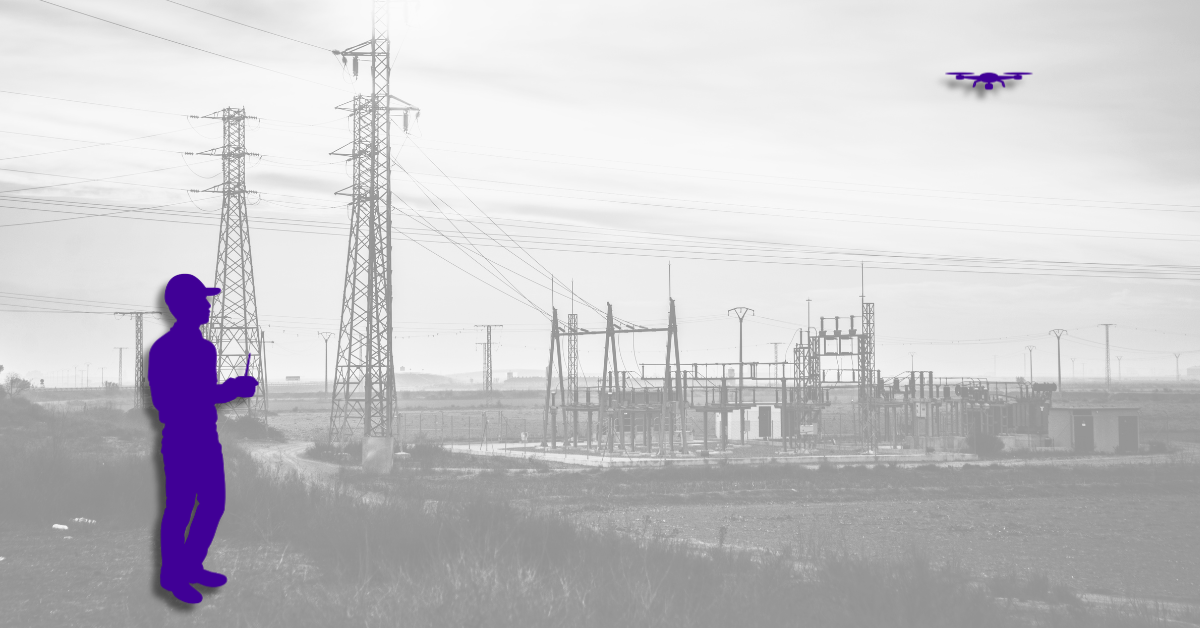

Summary: The goal of modern utilities drone defense is not to interfere with the airspace, but to master the data within it. By integrating drone telemetry into a broader converged security strategy and practical drone security processes, utilities can move from "watching the sky" to "managing the mission." In an increasingly crowded sky, knowing who is flying - and why - is the key to maintaining a resilient and secure grid.
In the utility sector, drones represent a complex intersection of operational efficiency and security risk. While drones have become indispensable tools for inspecting high-voltage lines, assessing storm damage, and monitoring vegetation, they simultaneously introduce new vulnerabilities to the very infrastructure they help maintain.
Because utilities are active users of this technology themselves, the security challenge isn't simply about clearing the sky - it’s about distinguishing authorized operations from potential threats. To maintain resilient operations, utility security must move toward an intelligence-led approach that prioritizes operator attribution over simple aircraft detection.
The Intelligence-Led Advantage of Utilities Drone Defense
With the implementation of Remote ID, identifying a pilot’s location in real-time is no longer the primary hurdle; the data is readily available. The challenge for utility security is transforming that real-time broadcast into actionable intelligence.
By treating telemetry as a sustained behavioral signal rather than a one-off alert, security teams can move beyond reactive monitoring to true risk management:
- Authorized Fleet Management: Utilizing a system that can ingest and whitelist authorized "friendly" drones - such as internal inspection teams or vetted contractors - to focus resources on unknown targets.
- Establishing Baselines: Differentiating between routine commercial inspections (including your own) and anomalous activity near sensitive assets.
- Identifying Repeat Actors: Correlating Remote ID data over time to identify persistent operators and patterns of interest that require investigation.
- Contextualizing Risk: Determining if a pilot’s behavior - despite being visible in real-time - suggests a specific threat. This includes identifying "loitering" patterns that may indicate reconnaissance/pre-operational planning.
A Sustainable and Defensible Utilities Drone Defense Strategy
By focusing on the human behind the controls, utilities can act within the parameters set by the Federal Aviation Administration (FAA) and broader aviation regulations while significantly strengthening their resilience. This intelligence-led posture allows security teams to:
- Conduct Lawful Engagement: Directly address operators with clear evidence of their flight history and proximity to critical assets.
- Support Law Enforcement: Provide investigators with a comprehensive data package - not just a single GPS coordinate, but a documented history of behavior and intent.
- Minimize Operational Risk: Avoid the hazards of physical or electronic interference with the drone while still achieving a decisive security outcome.

People Also Ask (PAA)
What makes drones a threat to utilities?
Drones can access sensitive areas, gather reconnaissance, or cause accidents near high-voltage lines, making operator identification crucial.
How do utilities identify unauthorized drones?
Utilities utilize drone detection systems to monitor airspace in real-time while maintaining a historical database of flight activity. By cross-referencing live telemetry with historical data, security teams can establish a baseline of "normal" authorized activity, allowing them to quickly isolate anomalies and identify suspicious trends or repeat unauthorized operators.
Can drone defense prevent service disruptions?
Yes. Early identification of potential threats helps prevent interference, allowing utilities to maintain operational continuity and safety.
What is the role of operator attribution in drone security?
Understanding who is flying a drone allows utilities to assess intent, track repeat actors, and take informed security actions while complying with laws and regulations.
How does a utility implement an intelligence-led drone defense strategy?
Implementation includes three main pillars:
- Visibility: Using receivers to capture real-time telemetry and Remote ID data across all sites.
- Context: Leveraging fleet management to whitelist "friendly" drones, which automatically filters out authorized activity and establishes a baseline for normal operations.
- Action: Using historical behavior patterns and operator attribution to drive risk-based decisions and, when necessary, lawful coordination with law enforcement.