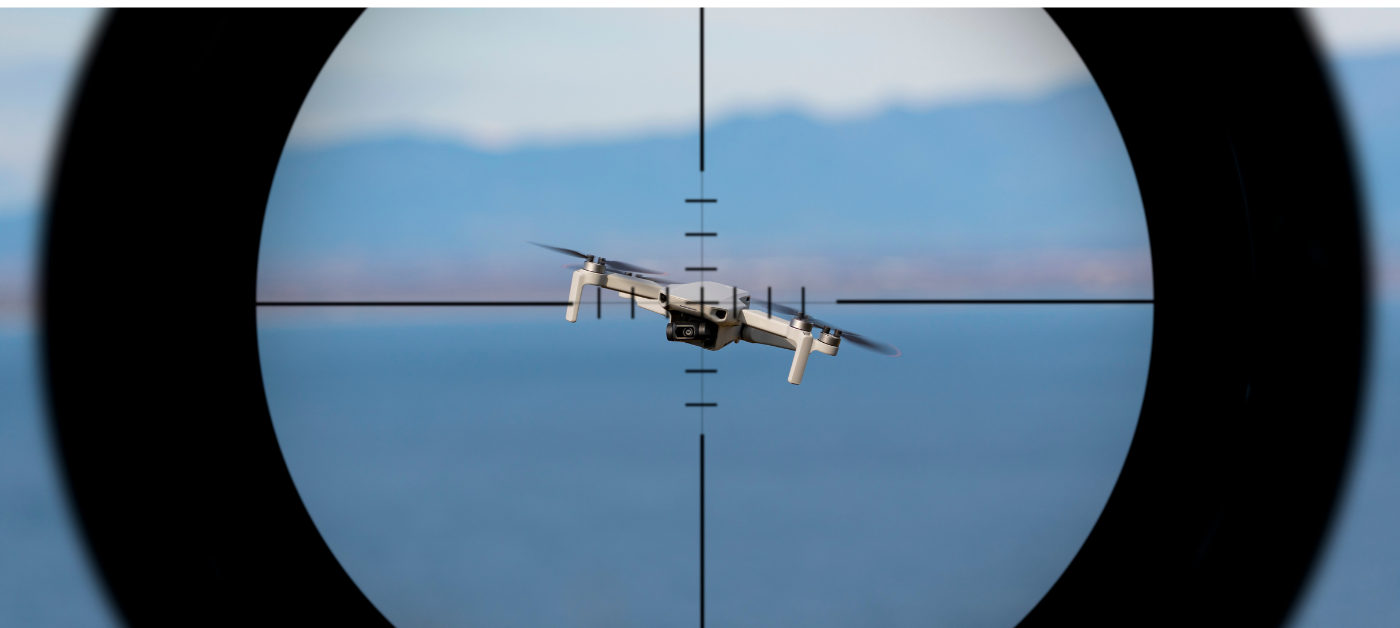

Summary: The SAFER SKIES Act expands counter-UAS authority to law enforcement under strict federal conditions, including mandated training, approved technologies, and detailed reporting requirements. As agencies navigate their new authority, balancing mitigation with the associated risks suggests that de-escalation supported by drone detection is an important tool to consider first.
For the first time, law enforcement agencies can exercise mitigation - disrupting, seizing, or disabling drones - but only under a "credible threat" determination and within a strictly controlled federal framework and evolving UAV regulations.
SAFER SKIES Act: Authority, Scope, and Requirements
Who Does the SAFER SKIES Act Apply To?
The SAFER SKIES Act expands counter-UAS authority beyond federal agencies to include qualified state, local, tribal, and territorial (SLTT) law enforcement agencies, as well as correctional institutions and other designated public safety entities.
However, this authority is not automatic. Only agencies that meet federal requirements and are authorized under the SAFER SKIES Act framework can participate in counter-UAS operations, particularly when it comes to mitigation.
What Authority Does the SAFER SKIES Act Provide?
Under the SAFER SKIES Act, authorized agencies may take action against drones that pose a credible threat, including the ability to disrupt, seize, or disable unmanned aircraft as part of drone mitigation operations.
This represents the first time such authority has been extended beyond a limited set of federal agencies, but it is tightly controlled and subject to strict oversight.
What Are the Requirements Under the SAFER SKIES Act?
The SAFER SKIES Act establishes a conditional framework for counter-UAS mitigation. To operate within this authority, agencies must meet three core requirements:
1. Federally Mandated Certification
Personnel must complete approved national training programs, such as those provided through the FBI’s National Counter-UAS Training Center (NCUTC). Unauthorized mitigation actions may result in civil penalties of up to $100,000 per violation.
2. Approved Counter-UAS Technologies
Agencies are limited to using technologies approved by the Department of Justice (DOJ) and Department of Homeland Security (DHS). These systems are vetted to ensure they do not interfere with the National Airspace System (NAS) or other critical operations.
3. Reporting and Oversight Requirements
Each mitigation event requires a formal report within 48 hours to the DOJ and DHS. This report must include details on the threat, the technology used, and the operational outcome. All activities should also align with applicable FAA policy and UAV regulations to prevent unintended impacts on the NAS.
Safety and Operational Considerations
While the authority to mitigate provides a new layer of security, it introduces significant liabilities that must be managed. In a complex environment, the following risks may outweigh the benefits of physical intervention:
- Collateral Damage (Kinetic Risk): Disabling a drone mid-air creates a falling projectile. In crowded venues—such as those hosted during the FIFA World Cup 2026 - the risk of injury to bystanders often outweighs the risk posed by the drone itself.
- Electromagnetic Interference (EMI): Mitigation tools that disrupt control links can inadvertently "bleed" into other frequencies, potentially interfering with medical evacuations, emergency responder radios, or legitimate commercial aviation.
- Deconfliction Protocols: Agencies are now required to set clear protocols with local Air Traffic Control to ensure mitigation actions do not disrupt authorized flights in the surrounding airspace.
The Power of De-escalation: Pilot Interdiction
Because active mitigation carries such high liability, in most cases the safest and most effective strategy remains Detection-Based De-escalation. Even with the new authority to mitigate, the professional standard is to resolve the threat at the lowest possible level of force.
- "Clueless or Careless" vs. Criminal: The vast majority of drone incursions are not malicious. By using RF detection to locate the pilot’s position in real-time, officers can resolve the situation through direct contact. A "warn and divert" conversation often ends the flight immediately, removing the threat without any risk to the airspace.
- Detection as Decision Time: Accurate detection provides the situational awareness required to make a "threat-versus-risk" call. If you know where the pilot is, you have the option to interdict on the ground - which is legally safer, preserves evidence, and avoids the secondary risks of electronic interference.
- Strategic Intelligence over Reactive Mitigation: Security is not just about the drone in the air right now; it is about the drone that was there yesterday. Historical reporting using drone detection systems allows you to identify patterns of interest-such as the same UAS ID appearing at multiple locations or recurring flights—to trigger an investigation before an incident occurs. This is critical because electronic or physical mitigation is effectively useless against a determined actor flying a drone at 100mph with a pre-programmed payload. At those speeds, by the time a threat is identified and a response is triggered, the drone has already reached its destination. Real security in these high-stakes scenarios is found in detecting the pilot during the planning/reconnaissance phase.
- Intelligence over Impact: Identifying the pilot is often more valuable for long-term security. The SAFER SKIES Act increased penalties for illegal drone use, including an extra five years for contraband delivery to correctional facilities. Ground-based apprehension ensures these penalties can actually be enforced.
SAFER SKIES Act and the FEMA C-UAS Grant Program: Preparing for the FY2027 Nationwide Expansion
While the initial $250 million in FY2026 grants was prioritized for states hosting the FIFA World Cup 2026, the next phase of federal funding marks a fundamental shift toward nationwide infrastructure.
For Fiscal Year 2027, FEMA has authorized the remaining $250 million of the C-UAS Grant Program, expanding eligibility to all 56 states and territories. Importantly, this funding is designed to support a wide range of counter-UAS capabilities, with a strong emphasis on drone detection, airspace awareness, training, and system integration - not just mitigation technologies.
This marks the first nationwide funding pool dedicated specifically to building scalable state and local airspace awareness infrastructure under the evolving framework of the SAFER SKIES Act and related federal initiatives.
Conclusion: SAFER SKIES Act and the Future of Counter-UAS Operations
The SAFER SKIES Act has moved the goalposts, but it hasn't changed the fundamental mission of public safety: protecting people and property with the least amount of risk.
Success in this new era won't be defined by the "push-button" solution of mitigation-it will be defined by the quality of detection data used to de-escalate threats before extreme measures become necessary.

People Also Ask(PAA)
What does the SAFER SKIES Act allow law enforcement to do?
It allows qualified law enforcement agencies to detect and mitigate drone threats under strict federal guidelines, including certification, approved technology use, and reporting requirements.
Why is counter-UAS mitigation considered high risk?
Counter-UAS mitigation can pose serious safety risks, including the potential for injury or death from falling drones, interference with critical communications systems, and disruption to nearby air traffic. Because of these risks, mitigation actions are tightly controlled and require strict operational procedures and oversight.
How does RF detection support counter-UAS operations?
RF detection helps identify drones and locate their operators, enabling law enforcement to respond early and often de-escalate and resolve incidents without active mitigation.
Will counter-UAS funding expand beyond major events like the World Cup?
Yes, future funding phases are expected to expand nationwide, supporting broader adoption of drone detection systems across all U.S. states and territories.