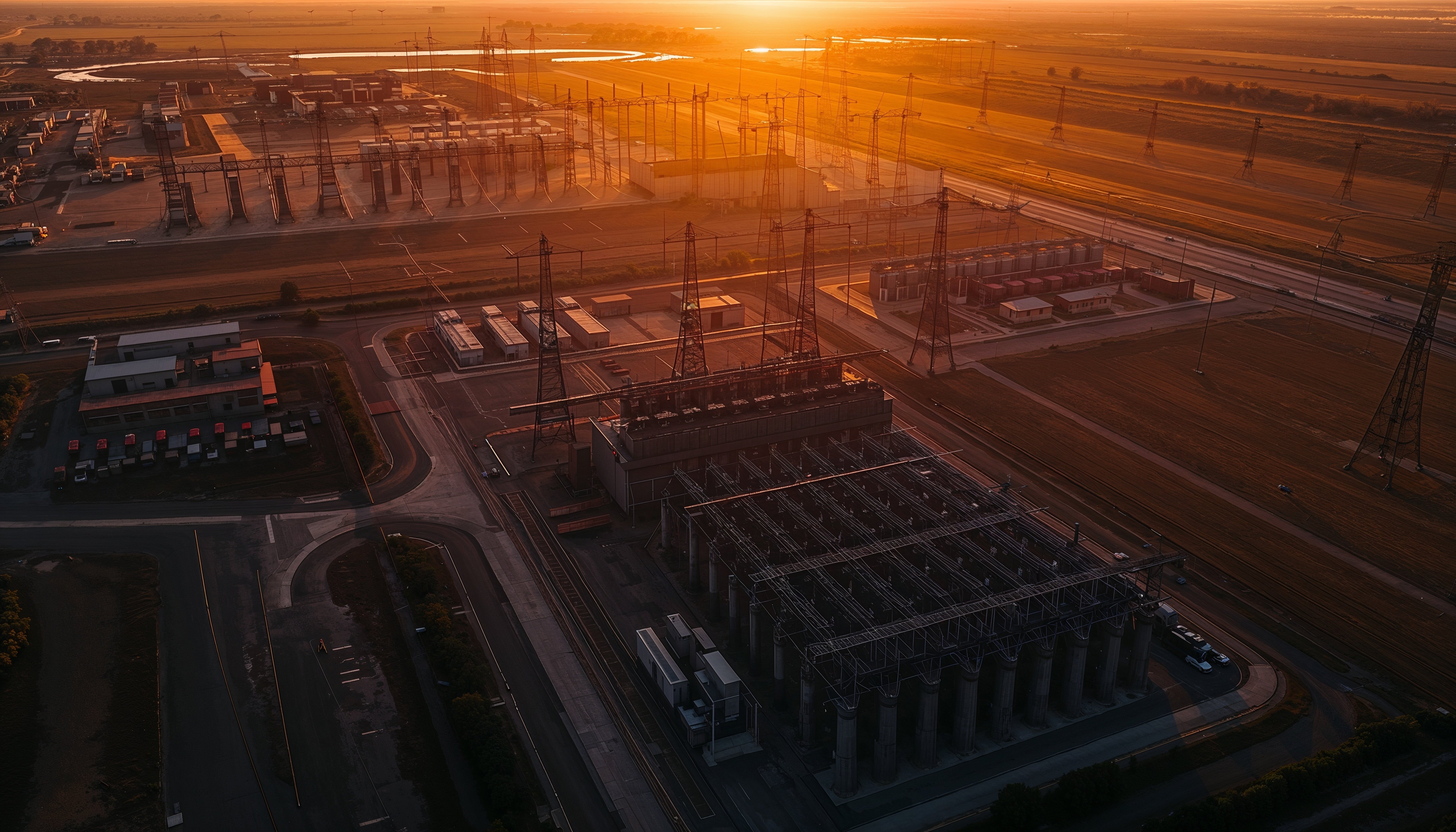

Summary: Drone detection for utilities has become essential as drones introduce new risks to critical infrastructure, from accidental intrusions to intentional surveillance or disruption. With real-time airspace awareness, utilities can identify and respond to unauthorized drone activity near substations, transmission lines, and control centers - protecting workers, preventing outages, and maintaining operational continuity.
The modern power grid is one of the most complex and critical systems in the world. From substations and transformers to transmission corridors and control centers, utilities work tirelessly to deliver safe, reliable electricity to millions of customers every day. But as reliable as the grid may be, it faces a growing challenge that doesn’t come from below, but from above: drones.
Once niche gadgets, drones have become widely available, affordable, and increasingly capable. And while utilities themselves have embraced drones for inspections, storm assessments, and maintenance, unauthorized drones pose significant risks to operations. This is where airspace awareness offered by drone detection technology comes into play. By monitoring the skies in real time, utilities can strengthen resilience, protect workers, and ensure reliable service delivery in an evolving security landscape.
The Challenge: Unauthorized Drones Above the Grid
The utility sector has always prioritized resilience - the ability to withstand and recover from threats ranging from storms and cyberattacks to physical intrusions. But drones introduce an additional layer of complexity.
- Accessibility: drones capable of carrying high-resolution cameras, thermal sensors, or modest payloads are available to nearly anyone at consumer-level prices.
- Unpredictability: a drone operator might be a careless hobbyist filming scenic footage, or a deliberate bad actor gathering intelligence on utility operations.
- Vulnerability: power lines, substations, and transformers are often in exposed locations, making them easy for drones to approach.
Unlike ground-based threats, drones can fly over fences, bypass gates, and evade traditional security systems. For utilities, this means that the sky has become a perimeter that must be secured.
Why Drone Detection for Utilities Is Critical to Grid Resilience
When we talk about grid resilience, we often focus on weather, cyberattacks, and physical sabotage. But airspace risks are now part of that equation.
Drone detection helps utilities:
1. Prevent Service Interruptions
Unauthorized drones near substations or transmission lines can force shutdowns, delay maintenance, or even cause equipment damage. Early detection minimizes downtime and keeps the lights on for customers.
Beyond reliability, the grid is also a matter of national security. Disruption to critical utility infrastructure - whether accidental or intentional - can have far-reaching consequences, making real-time airspace awareness essential for both operational resilience and broader protection.
2. Safeguard Critical Assets
Substations, transformers, and control centers are high-value targets. Detecting drones before they get too close prevents potential sabotage or surveillance.
3. Strengthen Public and Regulatory Trust
Communities and regulators expect utilities to protect critical infrastructure. Drone detection demonstrates a proactive approach to modern threats,reinforces trust, and protects your company from negative PR.
Real-World Risks: Managing Drone Risk in Critical Infrastructure
- Accidental Intrusions: In multiple U.S. states, hobbyists have accidentally flown drones into energized lines, triggering outages that affected thousands of customers. For example, a drone crashed into a high‑voltage power line in Southern California, knocking out power to hundreds of customers.
- Surveillance Concerns: Widespread 2024 U.S. drone sightings included numerous reports of unidentified drones observed near sensitive facilities, including energy infrastructure, raising alarms about potential unauthorized surveillance. Federal investigators logged thousands of sightings across multiple states.
- Sabotage Attempts: A modified DJI Mavic 2 drone was found near a Pennsylvania power substation in July 2020 with attached copper wire, likely intended to short‑circuit electrical equipment. Federal law enforcement described this as the first known case of a UAS specifically targeting U.S. energy infrastructure (it crashed before causing damage).
These incidents highlight the importance of moving beyond assumptions. Not every drone is malicious, but every drone near utility infrastructure is a potential risk until proven otherwise.
Drone Detection for Utilities: The Role of Remote ID
The Federal Aviation Administration (FAA) now requires most drones to broadcast Remote ID - a digital license plate for the sky. With Remote ID–enabled detection, security teams can quickly identify drones and most importantly locate the pilot to determine their intent.
Why Dedicated Remote ID Receivers Matter
While Remote ID signals are technically discoverable via smartphone apps, utility security requires a more robust approach. Consumer mobile devices lack the range and reliability needed for critical infrastructure. To achieve true situational awareness, utilities must deploy dedicated Remote ID receivers. These professional sensors provide the extended range (several miles) and 24/7 persistence necessary to detect threats before they reach the perimeter.
Why Remote ID Works in Practice
While critics argue that Remote ID can be disabled, doing so is far more complex than simply flipping a switch.
Modern drone manufacturers are required to integrate Remote ID into core firmware and hardware; tampering with these systems often triggers fail-safe mechanisms that render the aircraft unstable or inoperable. Furthermore, because almost all off-the-shelf components now broadcast by default, "going dark" requires advanced technical expertise and custom-built hardware.
From Detection to Intelligence
Remote ID doesn’t just show that a drone is present; it enables a proactive defense against coordinated threats. Security experts recognize that bad actors often use drones to test security response times or map facility vulnerabilities long before an actual attack occurs.
By utilizing Remote ID-enabled live and historical intelligence, utilities can:
- Identify Pre-Operational Probing: Detect "repeat fliers" who may be testing the perimeter at different times to see how and when your security teams react.
- Establish "Patterns of Life": Distinguish between a hobbyist passing through and a pilot systematically orbiting high-value assets like transformers or control centers.
- Enable Early Intervention: By identifying and locating a pilot via Remote ID before an incident escalates, utilities can engage law enforcement to intercept the individual.
- Disrupt the Target Cycle: Early intervention does more than stop one flight; it signals to a bad actor that your facility is "hardened." This deterrence often forces them to abandon their plan entirely, as they realize their anonymity is compromised.
This intelligence turns your airspace from a blind spot into a deterrence layer, ensuring that the first time a threat appears is also the last time they attempt to fly near your site.
Response Without Mitigation
Utility operators are generally not authorized to mitigate or disable drones, making visibility and coordination essential.
When unauthorized activity is detected, teams can:
- Document and track incidents
- Alert internal stakeholders
- Coordinate with law enforcement when necessary
This ensures a compliant, effective response while protecting infrastructure and personnel.
Scale First, Adapt as Needed
For utilities managing hundreds of sites, scalability is critical. Remote ID enables broad coverage without significant cost or operational burden.
If non-compliant drone activity becomes a recurring issue, additional capabilities can be evaluated. But starting with Remote ID allows utilities to build awareness first - then adapt based on real-world conditions.
The Future of Drone Detection for Utilities and Grid Security
The nation’s power grid is the backbone of modern life. But protecting it requires more than fences, gates, and ground patrols. Airspace awareness through drone detection is no longer optional - it’s essential. By investing in this capability, utilities can reduce downtime, protect workers, safeguard assets, and strengthen resilience against evolving threats.
In a world where drones are only becoming more common, the question is not if they will appear, but how you’ll respond when they do.
Request a demo today to learn how drone detection technology can help safeguard your substations, transmission lines, and control centers.

Prefer video format? Check out our FAQ video to learn how drone detection helps protect power grid and utility infrastructure.