---
title: Counter-Drone Isn’t a Push-Button Solution - And It Was Never Meant to Be
description: Counter-drone operations aren’t a push-button fix. Learn the legal, safety, and operational risks behind mitigation decisions.
image: https://blog.aerodefense.tech/hubfs/counter-drone.png
---
[ ](https://aerodefense.tech)
[](https://aerodefense.tech)
[✕](https://blog.aerodefense.tech/counter-drone#navbar_global)
- [PRODUCTS](https://aerodefense.tech/drone-detection-system-products/)
- [CHALLENGE](https://aerodefense.tech/drone-detection-system-products/unidentified-drones-challenge/)
- [PRODUCTS](https://aerodefense.tech/drone-detection-system-products/)
- [LEGALITY](https://aerodefense.tech/airwarden-legal-drone-detection/)
- [SAFETY ACT](https://aerodefense.tech/dhs-safety-act-designation/)
- [TESTIMONIALS](https://aerodefense.tech/drone-detection-system-products/testimonials/)
- [PRICING](https://aerodefense.tech/drone-detection-system-products/drone-detection-system-price/)
- [USE CASES](https://aerodefense.tech/use-cases/)
- [CORRECTIONAL FACILITIES](https://aerodefense.tech/correctional-facility-drone-detection/)
- [CRITICAL INFRASTRUCUTRE](https://aerodefense.tech/critical-infrastructure-drone-detection/)
- [STADIUMS](https://aerodefense.tech/stadium-drone-detection/)
- [RESOURCES](https://aerodefense.tech/resources)
- [SUPPORT](https://aerodefense.tech/resources/support)
- [RESOURCES](https://aerodefense.tech/resources)
- [BLOG](https://blog.aerodefense.tech/)
- [FAQS](https://aerodefense.tech/resources/frequently-asked-questions)
- [VIDEOS](https://aerodefense.tech/resources/videos)
- [ABOUT US](https://aerodefense.tech/about-us/)
- [CONTACT US](https://aerodefense.tech/contact-aerodefense/)
- [CAREERS](https://aerodefense.tech/aerodefense-careers/)
- [PRESS](https://aerodefense.tech/press/)
- [PARTNERS](https://aerodefense.tech/partners/)
- [ABOUT US](https://aerodefense.tech/about-us/)
- [LOGIN](https://app.aerodefense.tech/)
- [AIRWARDEN ESSENTIALS](https://app.aerodefense.tech/)
- [KNOWLEDGE BASE](http://help.aerodefense.tech/)
- [PRODUCTS](https://aerodefense.tech/drone-detection-system-products/)
- [PRODUCTS](https://aerodefense.tech/drone-detection-system-products/)
- [CHALLENGE](https://aerodefense.tech/drone-detection-system-products/unidentified-drones-challenge/)
- [PRODUCTS](https://aerodefense.tech/drone-detection-system-products/)
- [LEGALITY](https://aerodefense.tech/airwarden-legal-drone-detection/)
- [SAFETY ACT](https://aerodefense.tech/dhs-safety-act-designation/)
- [TESTIMONIALS](https://aerodefense.tech/drone-detection-system-products/testimonials/)
- [PRICING](https://aerodefense.tech/drone-detection-system-products/drone-detection-system-price/)
- [USE CASES](https://aerodefense.tech/use-cases/)
- [USE CASES](https://aerodefense.tech/use-cases/)
- [CORRECTIONAL FACILITIES](https://aerodefense.tech/correctional-facility-drone-detection/)
- [CRITICAL INFRASTRUCUTRE](https://aerodefense.tech/critical-infrastructure-drone-detection/)
- [STADIUMS](https://aerodefense.tech/stadium-drone-detection/)
- [RESOURCES](https://aerodefense.tech/resources)
- [RESOURCES](https://aerodefense.tech/resources)
- [SUPPORT](https://aerodefense.tech/resources/support)
- [RESOURCES](https://aerodefense.tech/resources)
- [BLOG](https://blog.aerodefense.tech/)
- [FAQS](https://aerodefense.tech/resources/frequently-asked-questions)
- [VIDEOS](https://aerodefense.tech/resources/videos)
- [ABOUT US](https://aerodefense.tech/about-us/)
- [ABOUT US](https://aerodefense.tech/about-us/)
- [CONTACT US](https://aerodefense.tech/contact-aerodefense/)
- [CAREERS](https://aerodefense.tech/aerodefense-careers/)
- [PRESS](https://aerodefense.tech/press/)
- [PARTNERS](https://aerodefense.tech/partners/)
- [ABOUT US](https://aerodefense.tech/about-us/)
- [LOGIN](https://app.aerodefense.tech/)
- [LOGIN](https://app.aerodefense.tech/)
- [AIRWARDEN ESSENTIALS](https://app.aerodefense.tech/)
- [KNOWLEDGE BASE](http://help.aerodefense.tech/)
[REQUEST DEMO](https://aerodefense.tech/drone-detection-system-products/#demo)
[FREE TRIAL](https://aerodefense.tech/airwarden-essentials-free-trial/)
[Blog Listing](https://blog.aerodefense.tech) › Counter-Drone Isn’t a Push-Button Solution - And It Was Never Meant to Be
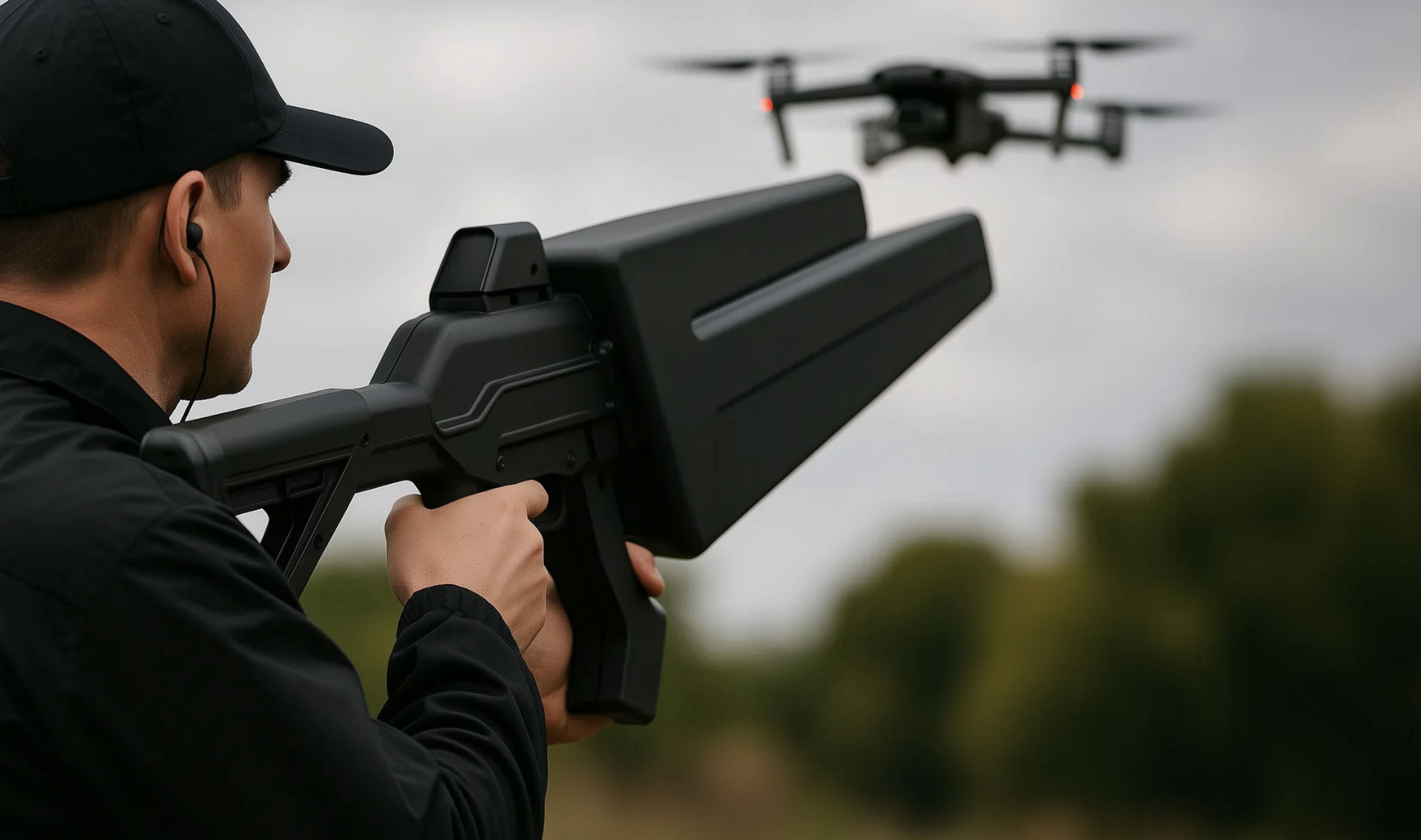
 By [Anna Sabryan, AeroDefense Sr Marketing Manager](https://blog.aerodefense.tech/author/anna-sabryan) on March 06, 2026
# Counter-Drone Isn’t a Push-Button Solution - And It Was Never Meant to Be
[Drone Detection](https://blog.aerodefense.tech/tag/drone-detection)
Share:
**Summary:** Counter-drone operations are often perceived as simple, but real-world deployment is far more complex. Drone mitigation tools carry legal, operational, and safety risks that can create unintended consequences when used without clear authority and coordination. A responsible counter-drone strategy prioritizes detection, assessment, and deliberate escalation to protect both people and airspace security.
---
As counter-drone technology becomes more visible at public events and critical infrastructure sites, there’s a growing perception that drone mitigation is simple: detect it, press a button, and the problem goes away.
In reality, counter-drone operations are far more complex and far more consequential than many realize.
[A recent incident near Fort Hancock](https://apnews.com/article/military-laser-border-drone-texas-airport-55aaab7093f7d6dd174f909f3875001c) highlights how deliberate and coordinated counter-UAS operations must be.
Earlier this month, a temporary airspace restriction was issued after the U.S. military used a laser-based counter-drone system against what was later reported to be a U.S. government drone operated by U.S. Customs and Border Protection.
Situations like this underscore an important reality: mitigation tools and counter-drone technology are powerful, but without full operational awareness and coordination, they can create unintended consequences.
## Counter-Drone Authority Has Expanded
Under U.S. federal law, counter-UAS mitigation authority has historically been limited to specific federal entities responsible for counter-UAS operations. The FY2026 National Defense Authorization Act (NDAA) - including the Safer Skies Act provisions - updated this framework to allow limited, conditional mitigation authority for certain trained and certified state, local, tribal, and territorial (SLTT) law enforcement and correctional agencies.
### Authorized to conduct counter-UAS mitigation under federal law:
- Department of Homeland Security
- Department of Justice
- Department of Defense
- Department of Energy
### Expanded SLTT authority (post-Safer Skies Act, FY2026 NDAA):
Certain state, local, tribal and territorial law enforcement and correctional agencies may now conduct mitigation - but **only if** they meet federal requirements for:
- formal training and certification in counter-UAS,
- use of federally-authorized mitigation technologies,
- compliance with established operational, safety, and reporting standards.
This expansion *does not* grant broad or unconditional authority - it creates a **legal pathway** for SLTT agencies to act when properly equipped and certified.
### Who still *does not* have mitigation authority:
- Private companies and organizations
- Property owners and event organizers
- General members of the public
Even SLTT mitigation authority is limited in scope and subject to ongoing federal oversight.
Unknown disruption — such as jamming, spoofing, or seizing a drone without proper authority — can violate Federal Communications Commission (FCC) laws, aviation regulations, and other statutes. Civil fines can reach $112,500 per violation under FCC rules, while criminal penalties can include up to $250,000 in fines and up to 5 years in prison for willful violations. Violating FAA aviation rules can also result in tens of thousands of dollars in fines, cease-and-desist orders, and potential criminal liability, especially if manned aircraft or government drones are affected.
## The Misconception: “Just Disable the Drone”
To the public, a [**mitigation**](https://blog.aerodefense.tech/drone-mitigation-technology) device may seem like a safe and immediate fix. But many counter-drone tools, particularly those that disrupt RF or GPS signals, carry significant operational and legal implications.
These systems can:
- Interfere with legitimate communications
- Disrupt nearby electronics or navigation systems
- Cause drones to fall unpredictably
- Damage property
- Create liability for mitigation operators and event organizers
The intent was protection. The outcome introduced additional risk.
That’s the reality of counter-drone operations: every action has downstream consequences.
## Detection is Decision Time
There’s an important distinction between awareness and disruption.
When teams can detect and identify a drone, and in some cases understand where the pilot is located, they gain decision time. Decision time reduces panic. It reduces overreaction. It allows coordination instead of impulse.
In higher-risk scenarios, mitigation may be required quickly. But even then, awareness provides critical context helping teams respond proportionally, document the incident, and act with greater confidence.
In many scenarios, understanding the pilot’s intent or simply making contact can resolve the situation without any electronic disruption at all.
Mitigation should be the last step, not the first.
## Public Safety is the Priority - Including the Airspace
As major events increase and drone usage becomes more common, pressure to “do something” will continue to grow. But doing something quickly is not the same as doing something responsibly.
Counter-drone technology that supports airspace security is powerful. And like any powerful tool, it requires:
- Clear authority
- Defined rules of engagement
- Trained operators
- Interagency coordination
- A full understanding of downstream effects
The goal is always safety for people on the ground and in the air.
The conversation around counter-drone technology shouldn’t be about how fast we can neutralize a drone. It should be about how intelligently we manage risk, how deliberately we escalate, and how carefully we protect the broader airspace environment.
Airspace security isn’t about reacting faster. It’s about responding smarter.
Because counter-drone operations were never meant to be a push-button solution and treating them as one creates the very risks they are intended to prevent.
[](https://blog.aerodefense.tech/hs/cta/wi/redirect?encryptedPayload=AVxigLL0RTWWudNN9yCMaa4KgilIcdrs%2F1vZcwbeve%2FRyGcmcTlhn5kgC3Pcr0KwHMtsOqsKPnUjqFc32y1RlCd4ib4%2Bo7A4uRvobRj0gObsSRrasy7nDXV2pTQrIFttL%2Bw6Y5AMvOij1xhNcWp0R7hZn87BPpiDAwv17iaQ%2B9Wtwco8VtnDsSLE&webInteractiveContentId=200152697442&portalId=2039414)
## Counter-Drone FAQs
#### What is counter-drone technology?
Counter-drone technology refers to systems used to detect, identify, monitor, and, when known, mitigate Unmanned Aircraft Systems (UAS).
#### Is it legal for organizations to disable a drone?
Under longstanding U.S. law, only certain federal agencies (such as the Department of Homeland Security, Department of Justice, and Department of Defense) had clear statutory authority to disrupt or disable unmanned aircraft.
However, with the passage of the Safer Skies Act as part of the FY 2026 NDAA, trained and certified state, local, tribal, and territorial (SLTT) law enforcement and correctional agencies now have a limited legal pathway to detect, track, and mitigate drones that pose a credible threat to safety or security of people, critical infrastructure, large public gatherings, or correctional facilities subject to national training, certification, and compliance with federally authorized counter-UAS equipment lists.
Despite this expansion, private organizations and most non-law enforcement entities still lack independent legal authority to disable drones, and using mitigation tools outside the authorized framework can violate federal communications and aviation laws.
#### What are the risks of using drone mitigation devices?
Mitigation tools that disrupt RF or GPS signals can create unintended consequences, including interference with nearby communications, loss of navigational integrity, unpredictable drone behavior, and uncontrolled crashes. These disruptions can result in property damage, injuries to people in the drone’s path, and significant civil liability.
Improper or unauthorized use may also violate federal communications and aviation laws, creating additional legal and regulatory exposure.
#### Why is detection important before mitigation?
Detection provides critical decision time. Knowing the drone’s precise location, altitude, and flight path allows operators to assess whether it is approaching a sensitive area, lingering over a crowd, or simply transiting the airspace.
That situational awareness enables teams to assess risk, coordinate with proper authorities, and determine whether escalation is necessary. In some cases, additional context, including possible operator location, may support response efforts, but the immediate priority is understanding the drone’s position and behavior before taking action.
#### What does a responsible counter-drone strategy look like?
A responsible counter-drone strategy prioritizes layered planning: detection, identification, assessment, coordination, and lawful escalation. It emphasizes training, clear authority, and operational protocols to ensure public safety remains the top priority.
Categories
**Browse All Categories**
- [Drone Detection](https://blog.aerodefense.tech/tag/drone-detection)
- [Remote ID](https://blog.aerodefense.tech/tag/remote-id)
- [Protecting Critical Infrastructure](https://blog.aerodefense.tech/tag/protecting-critical-infrastructure)
- [Drone Detection Legality](https://blog.aerodefense.tech/tag/drone-detection-legality)
- [Protecting Correctional Facilities](https://blog.aerodefense.tech/tag/protecting-correctional-facilities)
- [Protecting Public Events](https://blog.aerodefense.tech/tag/protecting-public-events)
- [Protecting Military](https://blog.aerodefense.tech/tag/protecting-military)
- [Company News](https://blog.aerodefense.tech/tag/company-news)
#### Book a Demo
Want to see how AeroDefense can protect your airspace? Schedule a personalized meeting or demo with our team and get expert answers to your questions.
[Book A Meeting](https://aerodefense.tech/aerodefense-book-meeting/)
#### Subscribe to Our Blog
Get expert insights on drones, technology, and regulations delivered straight to your inbox.
[Subscribe](https://info.aerodefense.tech/blog-subscription-lp)
#### Just For You
[ UAFR Vs. TFR: Understanding the Difference 9 min read](https://blog.aerodefense.tech/uafr-vs.-tfr) [ FCC Drone Waiver: What it Means for Your Airspace Security 7 min read](https://blog.aerodefense.tech/fcc-drone-waiver)
[](https://blog.aerodefense.tech/hs/cta/wi/redirect?encryptedPayload=AVxigLIcMDS7G9b2Lyn6tHw29t1ug0I52vhjXHoqZr4vkTv1pjPtmeyWfq%2FDDzPZIPD3%2FAMJfSOU6gLFmN7KG%2B1OP7qBlcCRjGA5%2FjvUw3bxBpqLuv7R7Oh%2FaW2boMTVrOOKK9pAnpcPHv3LfaqGiefbCxl%2FDZTup14FiSA282htiqmw6NCMh%2Fh6azaIOxHPwwK0sOzszbv40F%2B02Jz0O2dsW855wQ7m&webInteractiveContentId=192885686865&portalId=2039414)
Published by [Anna Sabryan, AeroDefense Sr Marketing Manager](https://blog.aerodefense.tech/author/anna-sabryan)
March 6, 2026

Comments
©2026 AeroDefense
-
-
-
-
 
```json
{
"@context" : "https://schema.org",
"@type" : "FAQPage",
"mainEntity" : [ {
"@type" : "Question",
"acceptedAnswer" : {
"@type" : "Answer",
"text" : "Counter-drone technology refers to systems used to detect, identify, monitor, and, when known, mitigate Unmanned Aircraft Systems (UAS)."
},
"name" : "What is counter-drone technology?"
}, {
"@type" : "Question",
"acceptedAnswer" : {
"@type" : "Answer",
"text" : "Under longstanding U.S. law, only certain federal agencies (such as the Department of Homeland Security, Department of Justice, and Department of Defense) had clear statutory authority to disrupt or disable unmanned aircraft. However, with the passage of the Safer Skies Act as part of the FY 2026 NDAA, trained and certified state, local, tribal, and territorial (SLTT) law enforcement and correctional agencies now have a limited legal pathway to detect, track, and mitigate drones that pose a credible threat to safety or security of people, critical infrastructure, large public gatherings, or correctional facilities subject to national training, certification, and compliance with federally authorized counter-UAS equipment lists. Despite this expansion, private organizations and most non-law enforcement entities still lack independent legal authority to disable drones, and using mitigation tools outside the authorized framework can violate federal communications and aviation laws."
},
"name" : "Is it legal for organizations to disable a drone?"
}, {
"@type" : "Question",
"acceptedAnswer" : {
"@type" : "Answer",
"text" : "Mitigation tools that disrupt RF or GPS signals can create unintended consequences, including interference with nearby communications, loss of navigational integrity, unpredictable drone behavior, and uncontrolled crashes. These disruptions can result in property damage, injuries to people in the drone’s path, and significant civil liability. Improper or unauthorized use may also violate federal communications and aviation laws, creating additional legal and regulatory exposure."
},
"name" : "What are the risks of using drone mitigation devices?"
}, {
"@type" : "Question",
"acceptedAnswer" : {
"@type" : "Answer",
"text" : "Detection provides critical decision time. Knowing the drone’s precise location, altitude, and flight path allows operators to assess whether it is approaching a sensitive area, lingering over a crowd, or simply transiting the airspace. That situational awareness enables teams to assess risk, coordinate with proper authorities, and determine whether escalation is necessary. In some cases, additional context, including possible operator location, may support response efforts, but the immediate priority is understanding the drone’s position and behavior before taking action."
},
"name" : "Why is detection important before mitigation?"
}, {
"@type" : "Question",
"acceptedAnswer" : {
"@type" : "Answer",
"text" : "A responsible counter-drone strategy prioritizes layered planning: detection, identification, assessment, coordination, and lawful escalation. It emphasizes training, clear authority, and operational protocols to ensure public safety remains the top priority."
},
"name" : "What does a responsible counter-drone strategy look like?"
} ]
}
```