---
title: "Port Security Grant Program for Drone Detection: How to Secure Funding"
description: Master the Port Security Grant Program (PSGP). Learn eligibility rules, compliance traps and budget tricks.
image: https://blog.aerodefense.tech/hubfs/Port%20Security%20Grant%20Program%20for%20drone%20detection.jpeg
---
[ ](https://aerodefense.tech)
[](https://aerodefense.tech)
[✕](https://blog.aerodefense.tech/port-security-grant-program-for-drone-detection#navbar_global)
- [PRODUCTS](https://aerodefense.tech/drone-detection-system-products/)
- [CHALLENGE](https://aerodefense.tech/drone-detection-system-products/unidentified-drones-challenge/)
- [PRODUCTS](https://aerodefense.tech/drone-detection-system-products/)
- [LEGALITY](https://aerodefense.tech/airwarden-legal-drone-detection/)
- [SAFETY ACT](https://aerodefense.tech/dhs-safety-act-designation/)
- [TESTIMONIALS](https://aerodefense.tech/drone-detection-system-products/testimonials/)
- [PRICING](https://aerodefense.tech/drone-detection-system-products/drone-detection-system-price/)
- [USE CASES](https://aerodefense.tech/use-cases/)
- [CORRECTIONAL FACILITIES](https://aerodefense.tech/correctional-facility-drone-detection/)
- [CRITICAL INFRASTRUCUTRE](https://aerodefense.tech/critical-infrastructure-drone-detection/)
- [STADIUMS](https://aerodefense.tech/stadium-drone-detection/)
- [RESOURCES](https://aerodefense.tech/resources)
- [SUPPORT](https://aerodefense.tech/resources/support)
- [RESOURCES](https://aerodefense.tech/resources)
- [BLOG](https://blog.aerodefense.tech/)
- [FAQS](https://aerodefense.tech/resources/frequently-asked-questions)
- [VIDEOS](https://aerodefense.tech/resources/videos)
- [ABOUT US](https://aerodefense.tech/about-us/)
- [CONTACT US](https://aerodefense.tech/contact-aerodefense/)
- [CAREERS](https://aerodefense.tech/aerodefense-careers/)
- [PRESS](https://aerodefense.tech/press/)
- [PARTNERS](https://aerodefense.tech/partners/)
- [ABOUT US](https://aerodefense.tech/about-us/)
- [LOGIN](https://app.aerodefense.tech/)
- [AIRWARDEN ESSENTIALS](https://app.aerodefense.tech/)
- [KNOWLEDGE BASE](http://help.aerodefense.tech/)
- [PRODUCTS](https://aerodefense.tech/drone-detection-system-products/)
- [PRODUCTS](https://aerodefense.tech/drone-detection-system-products/)
- [CHALLENGE](https://aerodefense.tech/drone-detection-system-products/unidentified-drones-challenge/)
- [PRODUCTS](https://aerodefense.tech/drone-detection-system-products/)
- [LEGALITY](https://aerodefense.tech/airwarden-legal-drone-detection/)
- [SAFETY ACT](https://aerodefense.tech/dhs-safety-act-designation/)
- [TESTIMONIALS](https://aerodefense.tech/drone-detection-system-products/testimonials/)
- [PRICING](https://aerodefense.tech/drone-detection-system-products/drone-detection-system-price/)
- [USE CASES](https://aerodefense.tech/use-cases/)
- [USE CASES](https://aerodefense.tech/use-cases/)
- [CORRECTIONAL FACILITIES](https://aerodefense.tech/correctional-facility-drone-detection/)
- [CRITICAL INFRASTRUCUTRE](https://aerodefense.tech/critical-infrastructure-drone-detection/)
- [STADIUMS](https://aerodefense.tech/stadium-drone-detection/)
- [RESOURCES](https://aerodefense.tech/resources)
- [RESOURCES](https://aerodefense.tech/resources)
- [SUPPORT](https://aerodefense.tech/resources/support)
- [RESOURCES](https://aerodefense.tech/resources)
- [BLOG](https://blog.aerodefense.tech/)
- [FAQS](https://aerodefense.tech/resources/frequently-asked-questions)
- [VIDEOS](https://aerodefense.tech/resources/videos)
- [ABOUT US](https://aerodefense.tech/about-us/)
- [ABOUT US](https://aerodefense.tech/about-us/)
- [CONTACT US](https://aerodefense.tech/contact-aerodefense/)
- [CAREERS](https://aerodefense.tech/aerodefense-careers/)
- [PRESS](https://aerodefense.tech/press/)
- [PARTNERS](https://aerodefense.tech/partners/)
- [ABOUT US](https://aerodefense.tech/about-us/)
- [LOGIN](https://app.aerodefense.tech/)
- [LOGIN](https://app.aerodefense.tech/)
- [AIRWARDEN ESSENTIALS](https://app.aerodefense.tech/)
- [KNOWLEDGE BASE](http://help.aerodefense.tech/)
[REQUEST DEMO](https://aerodefense.tech/drone-detection-system-products/#demo)
[FREE TRIAL](https://aerodefense.tech/airwarden-essentials-free-trial/)
[Blog Listing](https://blog.aerodefense.tech) › Port Security Grant Program for Drone Detection: How to Secure Funding

 By [Anna Sabryan, AeroDefense Sr Marketing Manager](https://blog.aerodefense.tech/author/anna-sabryan) on June 24, 2026
# Port Security Grant Program for Drone Detection: How to Secure Funding
[Protecting Critical Infrastructure](https://blog.aerodefense.tech/tag/protecting-critical-infrastructure)
Share:
Summary: The Port Security Grant Program (PSGP) for drone detection provides competitive federal funding to port authorities, facility operators, and government agencies to strengthen maritime security against terrorist threats. To secure a grant, applicants must strictly align their proposals with FEMA’s National Priorities, ensure correct cost-share compliance, and submit a highly detailed Investment Justification.
---
The [Port Security Grant Program](https://www.fema.gov/grants/preparedness/port-security)(PSGP) for drone detection is one of the most critical funding mechanisms available for safeguarding our nation’s maritime infrastructure. However, securing these highly competitive funds requires more than just a good idea - it demands a meticulous, compliant, and strategic application.
Whether you are a port authority managing sprawling terminals or a local emergency response agency looking to build new capabilities, understanding the intricate requirements of the PSGP is the key to unlocking this funding. Let’s break down everything you need to know to build a successful application.
[Download the 2026 Notice of Funding Opportunity ](https://blog.aerodefense.tech/hubfs/3rd%20Party%20Docs/FY_2026_PSGP_NOFO_Final.pdf)
## Why Drone Detection Aligns with PSGP Objectives
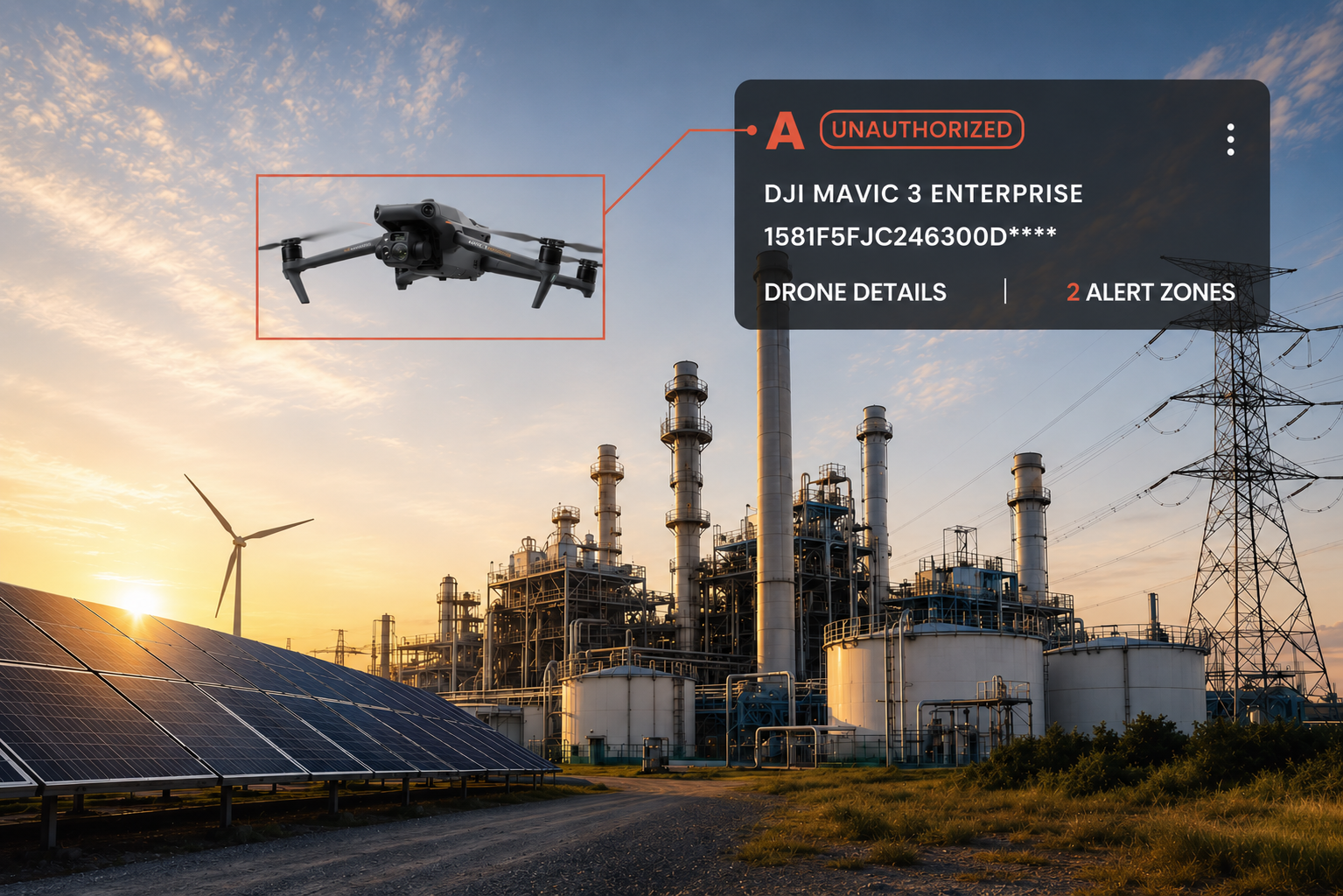
Unauthorized drone activity presents a growing security challenge for ports, terminals, and maritime facilities, frequently serving as a tool for hostile reconnaissance. Drone detection projects directly support PSGP objectives by helping organizations:
- **Disrupt Pre-Operational Planning:**Intercept threats in the reconnaissance phase by detecting and tracking unauthorized drones mapping out facility vulnerabilities, perimeter security, and critical assets.
- **Expose Surveillance Patterns:** Utilize historical flight logging and unique UAS identifiers to uncover repeated scouting missions, exposing vulnerability testing and active intelligence-gathering by bad actors over time.
- **Advance Proactive Threat Assessment:** Move from reactive security to proactive prevention, identifying and assessing potential drone-based security threats well before they escalate into active operational disruptions.
- **Improve Maritime Domain Awareness:** Establish a continuous, 3D security perimeter by extending domain awareness into the airspace above restricted port zones and shipping channels.
- **Enhance Multi-Agency Response:** Accelerate coordination with local security, law enforcement, and federal partners (like the FAA) by delivering real-time telemetry to locate both the drone and the operator during critical pre-attack windows.
- **Strengthen Post-Incident Evidence:** Secure airtight forensic reports and flight-path data to support law enforcement investigations, proving malicious intent or deliberate surveillance of critical maritime infrastructure.
## Who Can Apply? Eligibility Framework
To be eligible for PSGP funding, an applicant must be an entity subject to an Area Maritime Security Plan (AMSP). The program is highly collaborative but strictly regulated. Eligible applicants typically include:
- **Port Authorities & State/Local Government Agencies** (e.g., Police Departments, Fire Departments, and Offices of Emergency Management).
- **Facility Operators:** This includes terminal operators, ferry systems, bar/harbor pilots, and merchant’s exchanges.
**Important Note on Local Governments:** [FEMA](https://www.fema.gov/) views multiple agencies within a single local government (such as a city's police department, fire department, and emergency management office) as a single entity. Your internal departments must coordinate rather than compete against one another.
## The Application Pipeline
Navigating the digital infrastructure of federal grants can be daunting. The Port Security Grant Program application relies on three distinct platforms, and timing is absolutely critical.
### 1. Registration (SAM.gov)
Before doing anything else, your organization must register on the System for Award Management (SAM.gov) to secure a Unique Entity Identifier (UEI).
- **Timing:** Registration can take up to 4 weeks. Do not wait until the funding window opens.
- **Maintenance:** Your SAM.gov account must be renewed annually. Information from SAM.gov automatically populates your profile in FEMA's system.
### 2. Retrieval (Grants.gov)
Grants.gov is used strictly for downloading the necessary forms, including the Investment Justification (IJ) template and the budget worksheet.
- Navigate to Grants.gov, select "Apply for Grants," and search using the CFDA number: 97.056.
### 3. Submission (FEMA GO)
The actual building and final submission of your application happens via **FEMA GO** (GO.FEMA.gov). Ensure your team sets up accounts and completes email verification well ahead of the deadline.
### 4. Review the Notice of Funding Opportunity (NOFO) Thoroughly
Each funding cycle includes specific eligibility requirements, evaluation criteria, deadlines, and allowable costs. Applicants should carefully review the current PSGP Notice of Funding Opportunity and ensure all narratives, budgets, and supporting documentation directly align with the published guidance.
Even strong projects can lose competitiveness if they fail to address stated program priorities or application requirements.
## Writing an Unbeatable Investment Justification (IJ)
The Investment Justification is the heart of your application. It is a detailed narrative explaining exactly what your project is, why it matters, and how it protects the port.
To ensure your IJ passes peer review, follow these directives:
Start with a Documented Risk Assessment
Before developing an Investment Justification, applicants should clearly identify the security vulnerability the project is intended to address. FEMA reviewers generally expect applicants to demonstrate a defined threat, operational gap, or security deficiency rather than proposing technology without supporting evidence.
For drone detection projects, applicants should explain:
- The specific risks posed by unauthorized UAS activity.
- Areas of concern within the port environment.
- Potential operational, safety, or security impacts.
- Existing limitations in detection or response capabilities.
**Use the Official Form**
You must use [FEMA’s official IJ template](https://blog.aerodefense.tech/hubfs/3rd%20Party%20Docs/PSGP_FF-207-FY-23-108_formerly_089-5_IJ-Budget.xlsx). Substituting your own format will result in automatic disqualification.
**Establish a Terrorism Nexus**
Your project must have a clear port benefit and an explicit connection to combatting or preventing terrorism.
**Demonstrate Interagency Coordination**
Projects that support information sharing and coordinated response efforts may strengthen an application. When applicable, describe how drone detection data will be shared with port security partners, local law enforcement agencies, Coast Guard personnel, fusion centers, or emergency management organizations.
Clearly defining operational workflows and partner involvement helps demonstrate broader security benefits beyond a single facility.
**Build New Capabilities**The PSGP does not fund the normal course of everyday operations. Your project must fill a documented capability gap or build something new.
**Be Hyper-Specific**Rather than writing "implement a drone detection system," specify exactly what is being procured and the operational capability it will provide. For example: "Deploy a network of Remote ID-based drone detection sensors to provide continuous monitoring of unauthorized UAS activity across port facilities, including real-time alerts, pilot location identification, historical flight data retention, and forensic reporting capabilities."
The more clearly you define the equipment, coverage area, and security outcomes, the easier it is for reviewers to understand the project's value and alignment with port security objectives.
**Set Realistic Milestones**
Include time for Environmental Planning and Historic Preservation (EHP) reviews and controlled equipment approvals. Ensure all milestone dates fall within the grant's specified period of performance.
## Understanding the Budget & Cost-Share Requirements
### Building a Strong Cost Justification
A competitive PSGP application should connect proposed expenditures directly to measurable security outcomes. Rather than focusing solely on equipment acquisition, explain how the investment reduces identified risks, improves situational awareness, or addresses a documented capability gap.
Supporting evidence may include:
- Prior security incidents
- Risk assessments
- Operational vulnerabilities
- Threat intelligence
- Regulatory or security requirements
Your budget must be complete, reasonable, and cost-effective. Every cost must tie back directly to an approved Authorized Equipment List (AEL) number. If your equipment cannot be mapped to a specific AEL number, the entire project will be eliminated from consideration.
### The Cost-Share Breakdown
PSGP grants require a financial commitment from the recipient, which scales based on the sector:
| Sector / Applicant Type | Required Match |
| --- | --- |
| Public-Sector / Non-Profit | 25% Match |
| Private-Sector Applicants | 50% Match |
**Match Exceptions For Government Agencies**:
There is no match requirement for total project costs of $25,000 or less (though multiple small projects totaling over $25,000 will trigger the match).
There is no match requirement for grants specifically dedicated to training public safety personnel to enforce maritime security zones.
Matches can be cash or validated in-kind services/equipment, but they must follow the exact same compliance rules as the federal share (including EHP reviews). Note that you **cannot** use existing staff salaries as an in-kind match, nor can you double-dip a match used for another federal program.
### **Hard "Don'ts" to Keep in Mind**
- **No Contingency Funds:** Budgets must reflect actual expected costs, not "just in case" padding.
- **No Redactions:** Any organizational policies required during the application process must be submitted in full-redacted documents are not accepted.
- **Training Limitations:** While specialized training is highly encouraged, you cannot use grant funds to pay overtime for "free" training sessions.
## Scoring the Competitive Advantage: National & COTP Priorities
Your application is ultimately scored through a competitive process. While FEMA has not yet released the current Port Security Grant Program (PSGP) funding priorities, applicants should pay close attention to both national and local priorities once the Notice of Funding Opportunity (NOFO) becomes available. Applications that clearly align with an NPA receive a significant competitive boost-their **final score is multiplied by 20%**.
Historically, FEMA has identified several National Priority Areas (NPAs) that can provide a competitive advantage during the review process. For this year's funding cycle, the following National and COTP priorities align closely with drone detection and counter-UAS capabilities:
- **Enhancing Cybersecurity** – Unmanned aircraft can be used to support [cyber attacks](https://blog.aerodefense.tech/drone-cyber-attacks) against critical infrastructure by carrying wireless intrusion devices, rogue access points, signal interception equipment, or other payloads designed to compromise networks and communications systems.
Drone detection technologies help organizations identify and respond to unauthorized UAS activity before these platforms can be used to facilitate cyber-related threats. Additionally, drone detection data can be integrated into existing security operations and incident response workflows to provide a more comprehensive view of potential threats.
- **Protecting Soft Targets and Crowded Places** – Unmanned aircraft can be used to conduct surveillance, disrupt operations, deliver hazardous payloads, or create public safety concerns in densely populated maritime environments. Passenger terminals, cruise ports, ferry operations, waterfront events, and other high-traffic areas may be particularly vulnerable to unauthorized drone activity.
Real-time drone detection delivers a dual-layer advantage by combining live pilot tracking with long-term data analytics. By pinpointing the pilot's exact location in real time, security teams can instantly dispatch personnel to the operator, allowing them to determine intent on the spot and intercept potential threats immediately.
Simultaneously, the system can build historical intelligence that reveals long-term flight trends and behavioral anomalies, allowing teams to proactively identify risks and prevent security incidents before they threaten people, facilities, or critical maritime infrastructure.
- **Supporting Homeland Security Task Forces and Fusion Centers** – Unauthorized drone activity may signal potential security threats, suspicious behavior, or emerging incidents that require a unified multi-agency response. Drone detection technology bridges this gap by providing live data—including real-time alerts, aircraft telemetry, and exact pilot locations—to immediately coordinate law enforcement and homeland security partners on the spot.
Crucially, when a detection system supports data sharing, it also allows for the exchange of historical intelligence over time. By analyzing shared historical trends and recurring flight anomalies across jurisdictions, fusion centers and regional task forces can better collaborate to transition from reactive threat tracking to proactive incident prevention and more informed long-term operational decision-making.
- **Supporting Border Crisis Response and Enforcement** – Unmanned aircraft are increasingly used to conduct surveillance, transport contraband, support smuggling operations, and monitor law enforcement activities in coastal and border-adjacent regions. Drone detection technologies help maritime and border security agencies identify, track, and assess unauthorized UAS activity, providing real-time situational awareness that supports response, interdiction, and enforcement efforts in sensitive operational environments.
### Captain of the Port (COTP) Priorities
On a local level, your project must address the specific Transportation Security Incidents (TSIs) outlined in Section 5500 of your local Area Maritime Security Plan (AMSP). Double-check your local COTP priorities before writing your narrative to ensure your project solves a localized, high-risk vulnerability.
By starting early, focusing on granular detail in your budget, and directly tying your project to the prevention of maritime threats, you can submit a highly competitive package that stands out to FEMA reviewers.
## Reach out to our [sales team](mailto:sales@aerodefense.tech) to receive a sample IJ language for drone detection projects emphasized in last year's PSGP program guidance.
## People Also Ask
**What is the Port Security Grant Program?**
The Port Security Grant Program (PSGP) is a Federal Emergency Management Agency (FEMA) initiative designed to strengthen maritime critical infrastructure against terrorism and other major emergencies. It provides tens of millions in funding for physical security, cybersecurity, and response vessels.
**What are the requirements for the PSGP?**
Administered by FEMA and the U.S. Coast Guard, the program requires applicants to be subject to an Area Maritime Security Plan and mandates a 25% to 50% cost-share match depending on the organization type.
**Can a single applicant submit more than one project proposal?**Yes. An eligible entity can submit one overarching application per Port Area, but that application can contain up to five separate Investment Justifications (IJs). Each distinct project requires its own individual IJ form and individual itemized budget layout.
**Is the required cost-share calculated per project or across the entire application?**The cost-share requirement applies to the total eligible costs requested across all projects in an application. If multiple Investment Justifications (IJs) are submitted, each project budget must identify its portion of the required match. Matching funds cannot be counted toward more than one project and must comply with FEMA's documentation requirements.
**Who can apply for the Port Security Grant Program?**
Based on the 2025 program, eligibility includes: Port authorities, facility operators, city, township, and county governments, state agencies, federally recognized tribal governments, authorized non-profit organizations, and certain private operators. Confirm the full requirements in the official notice before applying.
**How much funding does the Port Security Grant Program offer?**
The current listing shows $90 million (FY 2025; 2026 allocation TBD). Verify award ceilings, matching requirements, and allowable costs in the official notice.
**Who funds the Port Security Grant Program?**
The Port Security Grant Program (PSGP) is funded by the Department of Homeland Security - Federal Emergency Management Agency (FEMA). Verify program details on the funder's official page before applying.
## Port Security Grant Program for Drone Detection FAQs
#### What is an AMSP, and how do I know if my organization is subject to one?
An Area Maritime Security Plan (AMSP) is a localized port security strategy overseen by the U.S. Coast Guard. You are subject to it if you operate commercial port infrastructure, handle regulated vessels, or provide primary emergency response in a designated port zone. Check with your local Coast Guard Captain of the Port (COTP) to verify.
#### Can we use PSGP funds to replace old equipment or cover daily operating costs?
No. The PSGP does not fund the normal course of business or basic replacements. Your project must build a new capability or fix a specific security gap identified in the AMSP (e.g., upgrading a standard entry point to a high-security biometric system).
#### What is an EHP review, and how does it impact my timeline?
An Environmental Planning and Historic Preservation (EHP) review ensures physical projects (like installing cameras or fencing) do not harm local ecosystems or historic sites. It typically takes 30 to 45 business days to approve, and you cannot start any physical work or spend grant funds until it clears.
#### Can different departments from the same city submit separate applications?
FEMA views an entire local government as a single entity. If your police, fire, and emergency management departments submit uncoordinated, separate applications, they will compete against each other. Agencies must collaborate internally and submit a unified request.
#### How long do we have to spend the grant funds if awarded?
The standard Period of Performance is 36 months from the official award date. All purchasing, installations, and project closeouts must be fully completed within this 3-year window.
Categories
**Browse All Categories**
- [Drone Detection](https://blog.aerodefense.tech/tag/drone-detection)
- [Remote ID](https://blog.aerodefense.tech/tag/remote-id)
- [Protecting Critical Infrastructure](https://blog.aerodefense.tech/tag/protecting-critical-infrastructure)
- [Drone Detection Legality](https://blog.aerodefense.tech/tag/drone-detection-legality)
- [Protecting Correctional Facilities](https://blog.aerodefense.tech/tag/protecting-correctional-facilities)
- [Protecting Public Events](https://blog.aerodefense.tech/tag/protecting-public-events)
- [Protecting Military](https://blog.aerodefense.tech/tag/protecting-military)
- [Company News](https://blog.aerodefense.tech/tag/company-news)
#### Book a Demo
Want to see how AeroDefense can protect your airspace? Schedule a personalized meeting or demo with our team and get expert answers to your questions.
[Book A Meeting](https://aerodefense.tech/aerodefense-book-meeting/)
#### Subscribe to Our Blog
Get expert insights on drones, technology, and regulations delivered straight to your inbox.
[Subscribe](https://info.aerodefense.tech/blog-subscription-lp)
#### Just For You
[ A Guide to UAFR Eligibility for Energy Sector Facilities 10 min read](https://blog.aerodefense.tech/uafr-energy-sector-requirements) [.png) FAA Drone Restrictions for Critical Infrastructure: Navigating the May 2026 UAFR Proposal 10 min read](https://blog.aerodefense.tech/faa-drone-restrictions-for-critical-infrastructure)
[](https://blog.aerodefense.tech/hs/cta/wi/redirect?encryptedPayload=AVxigLI6pQyxLERE0mTlUBg%2FQrZf5pUfRcQWdVrNes7a8n4Qb%2BCibDxo8GqXA%2FpeGQvD4A8kqYlXb0PuSMDj3sdnXWE1sQ%2BXjWZsiTZNr5fzdhmpvC9AmrRO%2Bd3FjGLZjWllQKBNtNnvy4rSz%2FyiWlDygCpwG1OqC%2BlbjTCnqDuiJD%2BGts%2Bc2yjmykYzCqQMK5o5%2F0kAuClrBW4HVycL0wrDtBBnaP1U&webInteractiveContentId=192885686865&portalId=2039414)
Published by [Anna Sabryan, AeroDefense Sr Marketing Manager](https://blog.aerodefense.tech/author/anna-sabryan)
June 24, 2026

Comments
©2026 AeroDefense
-
-
-
-
 
```json
{
"@context" : "https://schema.org",
"@type" : "FAQPage",
"mainEntity" : [ {
"@type" : "Question",
"acceptedAnswer" : {
"@type" : "Answer",
"text" : "An Area Maritime Security Plan (AMSP) is a localized port security strategy overseen by the U.S. Coast Guard. You are subject to it if you operate commercial port infrastructure, handle regulated vessels, or provide primary emergency response in a designated port zone. Check with your local Coast Guard Captain of the Port (COTP) to verify."
},
"name" : "What is an AMSP, and how do I know if my organization is subject to one?"
}, {
"@type" : "Question",
"acceptedAnswer" : {
"@type" : "Answer",
"text" : "No. The PSGP does not fund the normal course of business or basic replacements. Your project must build a new capability or fix a specific security gap identified in the AMSP (e.g., upgrading a standard entry point to a high-security biometric system)."
},
"name" : "Can we use PSGP funds to replace old equipment or cover daily operating costs?"
}, {
"@type" : "Question",
"acceptedAnswer" : {
"@type" : "Answer",
"text" : "An Environmental Planning and Historic Preservation (EHP) review ensures physical projects (like installing cameras or fencing) do not harm local ecosystems or historic sites. It typically takes 30 to 45 business days to approve, and you cannot start any physical work or spend grant funds until it clears."
},
"name" : "What is an EHP review, and how does it impact my timeline?"
}, {
"@type" : "Question",
"acceptedAnswer" : {
"@type" : "Answer",
"text" : "FEMA views an entire local government as a single entity. If your police, fire, and emergency management departments submit uncoordinated, separate applications, they will compete against each other. Agencies must collaborate internally and submit a unified request."
},
"name" : "Can different departments from the same city submit separate applications?"
}, {
"@type" : "Question",
"acceptedAnswer" : {
"@type" : "Answer",
"text" : "The standard Period of Performance is 36 months from the official award date. All purchasing, installations, and project closeouts must be fully completed within this 3-year window."
},
"name" : "How long do we have to spend the grant funds if awarded?"
} ]
}
```