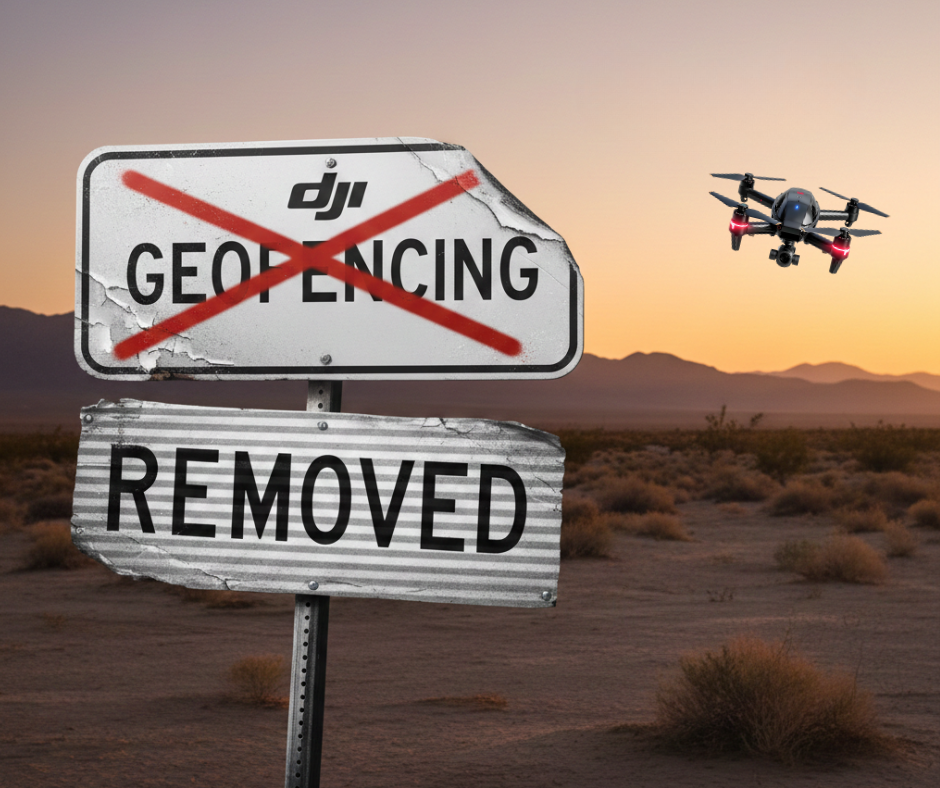

Summary: DJI removes geofencing, replacing automatic flight restrictions with advisory warnings that pilots can choose to bypass. While this change gives drone operators more flexibility, it also increases their responsibility to comply with FAA regulations. As a result, organizations responsible for protecting sensitive airspace must rely on drone detection solutions to maintain security and situational awareness.
Drones are becoming increasingly common in both recreational and professional settings, from aerial photography to inspections of infrastructure and emergency response operations. As more drones take to the skies, understanding how they interact with restricted airspace is critical. As of January 13, 2025, DJI has removed geofencing, and the burden of safety now falls on pilots and organizations alike, making awareness, and detection technology more important than ever.
What Was DJI Geofencing?
DJI’s geofencing system created virtual boundaries around restricted or sensitive airspace. When enabled, drones were automatically prevented from taking off or entering these zones unless pilots received special authorization.
Historically, these zones included:
- Airports and heliports
- Prisons and correctional facilities
- Military installations
- Government buildings
- Critical infrastructure
- Emergency response areas
This system acted as a preventative safety control, helping reduce accidental or negligent airspace violations and limiting malicious misuse.
What Has Changed?
DJI has transitioned from hard flight restrictions to a warning-based model under its FlySafe framework. Instead of blocking flight, DJI drones now typically:
- Display on-screen airspace warnings
- Provide informational alerts
- Allow pilots to proceed without unlocking or authorization
This effectively removes DJI’s enforcement role and places full responsibility on the pilot to understand and comply with airspace regulations.
While DJI has positioned this change as supporting pilot education and regulatory compliance, it also significantly reduces automatic safeguards - particularly in sensitive locations where prevention is critical.
Why Did DJI Remove Geofencing?
DJI cites regulatory alignment and pilot responsibility as the primary drivers. The company points to the FAA’s Remote ID requirements, which require most drones operating in U.S. airspace to broadcast identifying and location information.
DJI argues that:
- Remote ID enables real-time accountability
- Pilots should assume responsibility for lawful operations
- Manufacturers should not enforce airspace restrictions globally
However, the timing of this shift also coincides with increasing regulatory and political pressure on DJI, including government bans, legislative efforts to restrict Chinese-made drones, and heightened scrutiny of data security.
For more information on Remote ID, check out our Quick Guide to Remote ID Drone Detection.
Why This Matters for Public Safety and Security
DJI removes geofencing, reshaping the airspace risk landscape and placing greater responsibility on facilities to manage drone threats.
Facilities that once relied on automatic flight prevention now face:
- Increased drone incursions
- Higher probability of accidental airspace violations
- Expanded opportunities for intentional misuse
The Growing Need for Drone Detection Systems
Critical infrastructure, campuses, correctional facilities, and corporate sites can no longer rely on geofencing, visual spotting or manual reporting to understand what’s happening in their airspace. Without reliable visibility, security teams are left reacting after an incident instead of preventing one.
FAA-mandated Remote ID offers a practical and scalable way to close this gap. Often compared to a digital license plate, Remote ID broadcasts a drone and pilot’s location, altitude, and identifying information in real time, allowing organizations to quickly detect and assess nearby drone activity. This immediate awareness helps teams determine how they will respond to de-escalate the situation and have the pilot safely land their drone.
For many organizations, Remote ID–based detection is also the most cost-effective starting point. Unlike complex radar or multi-sensor systems that require significant infrastructure and budget, Remote ID receivers are lightweight, affordable, and easy to deploy across multiple sites. This makes it possible to establish broad airspace coverage without large capital investments, while still gaining actionable intelligence.
By combining affordability, ease of deployment, and real-time visibility, Remote ID gives security teams a smart first layer of defense. It empowers facilities to monitor their airspace, identify operators, and build a foundation for other drone detection strategies as risks evolve.
Conclusion
The end of DJI geofencing signals a turning point in airspace monitoring. With fewer automated restrictions, protecting sensitive airspace now depends more on detection, awareness, and enforcement than built-in controls.
As drones continue to proliferate, DJI’s removal of geofencing on many of its platforms underscores the limitations of relying on manufacturers to restrict unsafe flight.
Maintaining secure airspace now requires real-time drone detection and pilot identification technologies.
For correctional facilities, airports, utilities, government agencies, and public safety teams, adapting to this new reality is essential.
